
Selling a motor vehicle represents one of the largest consumer financial transactions outside of residential real estate. Whether you are transitioning to an electric vehicle, liquidating an unneeded household asset, or seeking maximum equity from your daily commuter, navigating the modern used car marketplace requires objective valuation analysis, legal documentation accuracy, and tactical negotiation. With used car valuations shifting rapidly following post-pandemic supply chain normalizations, choosing the correct selling channel can mean a financial spread of several thousand dollars on identical vehicle models.
Automobile owners face four distinct distribution avenues: direct private-party consumer sales, instant online cash acquisitions, traditional dealership trade-ins, and specialized consignment auctions. Each sales channel involves distinct trade-offs balancing net financial return against transaction speed, personal convenience, and legal liability. Making an informed decision demands understanding valuation algorithms, statutory title transfer mechanics, sales tax credit offsets, and fraud prevention protocols.
Vehicle Valuation Analysis: Deciphering Pricing Algorithms
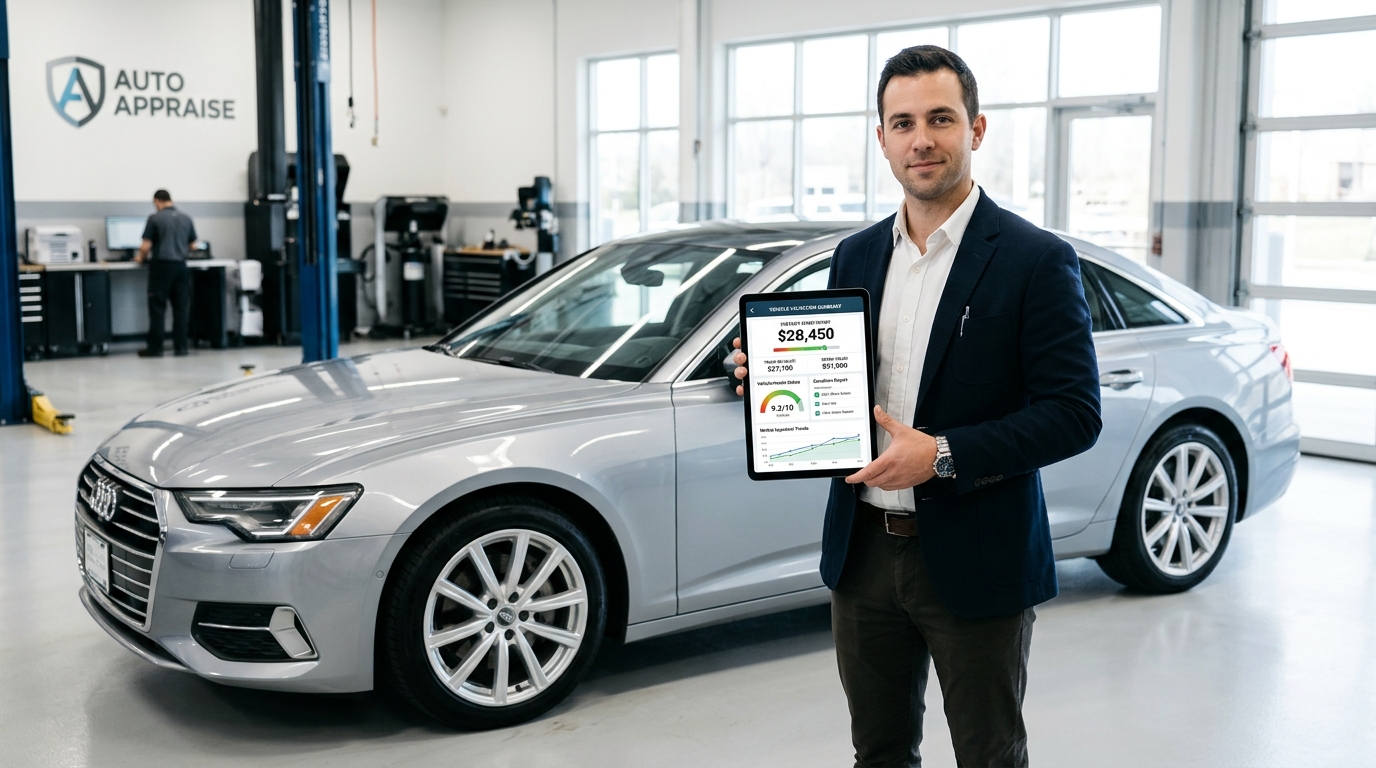
Determining your car fair market worth begins with understanding how modern valuation guides operate. Pricing is no longer calculated from static quarterly paper books. Real-time automotive valuation engines ingest millions of weekly data points, including wholesale dealer auction transactions from Manheim Market Report (MMR), Black Book wholesale feeds, retail listing velocity on public portals, and local geographic supply curves.
To obtain an accurate appraisal, vehicle owners must distinguish between three distinct valuation standards:
1. Private Party Value: The historical monetary amount expected when selling directly to an individual consumer. This tier yields the highest gross financial return, typically sitting ten to twenty percent above wholesale offers, compensating the seller for advertising, test drive staging, and administrative legwork.
2. Trade-In Allowance: The wholesale amount a licensed car dealer credits toward the purchase of another vehicle on their lot. Dealerships calculate trade-in values based on wholesale auction clearance minus mandatory reconditioning expenses (mechanical inspections, detailing, tires, paint touch-ups) and a target retail profit margin of fifteen hundred to three thousand dollars.
3. Instant Cash Offer: Guaranteed buyout pricing generated by algorithmic car buying companies like CarMax, Carvana, and Kelley Blue Book Instant Cash Offer (KBB ICO). These cash offers represent immediate liquidity without an obligation to purchase a replacement vehicle. They generally land between wholesale dealer trade-in and private party retail value.
| Valuation Platform | Core Data Source | Underwriting Methodology | Best Used For |
|---|---|---|---|
| Kelley Blue Book (KBB) | Cox Automotive wholesale auctions and retail dealer listings | Tiered pricing (Fair, Good, Very Good, Excellent) based on cosmetic condition | Setting baseline private party listing prices and retail negotiation ranges. |
| Edmunds True Market Value | Dealer actual transaction data and nationwide retail sales invoices | Calculates true selling price after incentives, discounts, and regional supply | Cross-referencing dealer trade-in fairness and online partner appraisals. |
| NADAguides (J.D. Power) | Credit union and banking loan underwriting clearance records | Focuses on loan-to-value (LTV) limits that lenders permit on used vehicles | Understanding how much financing private buyers can obtain from banks. |
| Black Book Wholesale | Daily physical and digital closed dealer auctions across North America | Real-time auction clearing velocity without consumer retail markups | Anticipating absolute dealer bottom floor trade-in numbers. |
When generating an appraisal online, never rely on a generic year, make, and model query. Enter your specific seventeen-digit Vehicle Identification Number (VIN) or license plate state combination. Decoding the VIN unlocks precise factory equipment packages, premium audio tiers, driver assistance safety packages, and transmission variants that standard dropdown menus often miss. For example, comparing pricing across popular commuter vehicles, such as evaluating Honda Civic Sport resale values, demonstrates that individual factory options like manual transmissions or optional driver assist suites can alter resale offers by over one thousand dollars.
Content Gap Analysis: Trade-In Sales Tax Offsets and Sunk Costs
A major flaw in generic online guides is the blanket advice that private party sales are always financially superior. While private sales yield higher gross payments, they frequently produce equal or inferior net returns once state sales tax trade-in credits are calculated.
In over forty-two US states, state revenue statutes grant a sales tax credit for vehicle trade-ins conducted through a licensed dealership. Under this provision, buyers pay sales tax solely on the difference between the new car purchase price and their trade-in valuation, rather than the entire purchase price of the replacement vehicle.
Consider a practical mathematical scenario in a state with an eight percent combined state and municipal sales tax rate. A seller plans to buy a forty-thousand-dollar replacement vehicle and owns a clean used car appraised at twenty thousand dollars:
Scenario A (Dealer Trade-In): The dealership offers eighteen thousand five hundred dollars as a trade-in allowance, which is fifteen hundred dollars below the twenty-thousand-dollar private market price. However, trading the vehicle reduces the taxable purchase basis from forty thousand dollars down to twenty-one thousand five hundred dollars. The sales tax savings is calculated as:
Sales Tax Savings = $18,500 * 0.08 = $1,480
Net Financial Benefit = $18,500 + $1,480 = $19,980
Scenario B (Private Party Sale): The owner lists the vehicle privately, spends one hundred dollars on professional detailing, spends fifty dollars on listing classifieds, spends three weeks accommodating buyer test drives, and successfully sells the vehicle for twenty thousand dollars cash. Because private sales do not qualify for dealer trade-in tax offsets in most jurisdictions, the buyer receives twenty thousand dollars gross minus one hundred fifty dollars in marketing expenses, netting nineteen thousand eight hundred fifty dollars.
In this realistic scenario, the dealer trade-in delivers equal net financial value while eliminating weeks of advertising, test drive liability, and administrative title friction. Calculating your state specific sales tax credit before deciding between private sale and dealer trade-in is mandatory, just as calculating accurate deduction thresholds is essential when structuring a tax refund status tracking plan for capital allocation.
| Financial Parameter | Private Party Sale | Dealer Trade-In (With Tax Offset) | Instant Online Cash Offer (CarMax/Carvana) |
|---|---|---|---|
| Gross Valuation Offer | $20,000.00 (Market Ceiling) | $18,500.00 (Wholesale Trade) | $18,800.00 (Direct Buyout) |
| Sales Tax Credit (at 8%) | $0.00 (No credit applied) | +$1,480.00 (Applied to new vehicle) | $0.00 (Unless buying from same platform) |
| Out-of-Pocket Preparation Costs | -$150.00 (Detailing + ads) | $0.00 (Dealer cleans vehicle) | $0.00 (Sold in current state) |
| Transaction Timeframe | 14 to 30 days | Same day (1 to 2 hours) | 24 to 48 hours |
| Net Effective Yield | $19,850.00 | $19,980.00 | $18,800.00 |
Top 10 Car Selling Platforms and Channels Compared
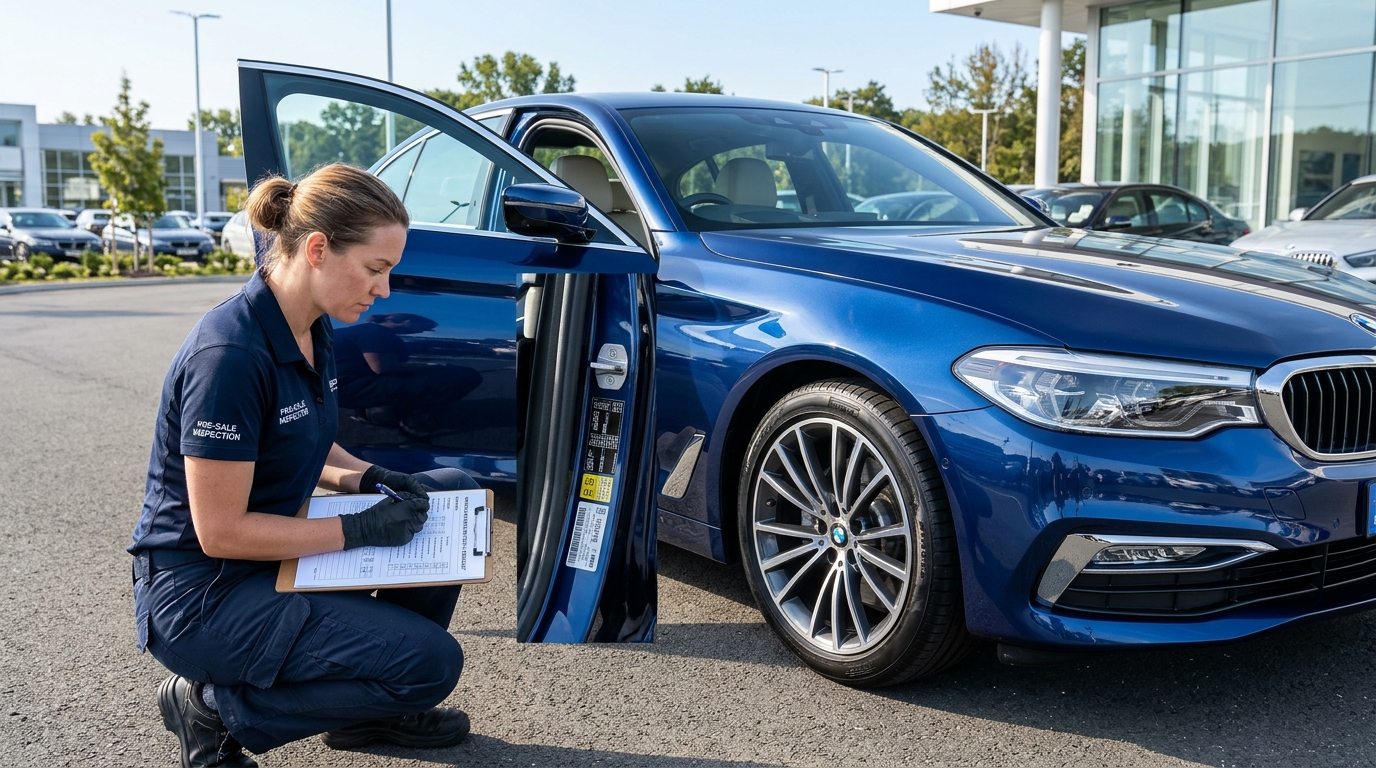
To identify where to list or sell your vehicle, evaluate the top 10 channels operating in the United States used automotive marketplace. The optimal venue depends on your vehicle age, mechanical condition, title branding status, and personal time availability.
| Selling Platform | Transaction Model | Pricing Level | Payment Clearance | Pickup / Logistics | Primary Drawback |
|---|---|---|---|---|---|
| 1. Private Consumer Sale | Direct peer-to-peer transaction | Highest gross market ceiling | Cashier check or escrow | Seller manages in person | High fraud risk, screening buyers, test drive safety. |
| 2. CarMax Instant Offer | Corporate physical dealership appraisal | Strong competitive corporate buyout | Bank draft issued same day | Drop off at local superstore | Requires physical inspection before final check is written. |
| 3. Carvana Online Sell | Digital valuation and home collection | High algorithmic offer on clean late models | ACH direct deposit or printed check | Home driveway flatbed pickup | Deductions can occur if condition was misreported online. |
| 4. KBB Instant Cash Offer | Aggregator bidding routed to local participating dealers | Solid wholesale-to-retail balance | Dealer check upon inspection | Take car to participating local dealer | Local dealers often renegotiate price upon arrival. |
| 5. Edmunds Online Appraisal | Automated tool tied to CarMax network | Matches CarMax underwriting | Verified corporate payment | CarMax physical location | Offer expires strictly after seven business days. |
| 6. Franchised Dealership Trade | Traditional in-person dealer trade | Lower wholesale base + sales tax credit | Credited toward replacement loan | Completed on dealer showroom floor | Dealers blend trade value with new car sales markup. |
| 7. Driveway / Lithia Motors | National dealership group digital buying | Competitive on late model domestic/import | Electronic funds transfer | Remote pickup coordinated | Paperwork turnaround can take several days. |
| 8. CarGurus Sell My Car | Hybrid private listing and dealer offer network | Offers both retail listing and instant bids | Secure digital payment escrow | Dependent on selected channel | Private seller listing fees apply for premium visibility. |
| 9. Peddle / Wheelzy | Specialized damaged, scrap, and high mileage buyers | Scrap / salvage wholesale floor value | Check handed over at tow truck arrival | Free tow truck pickup included | Minimal payout; strictly for non-running or damaged units. |
| 10. Bring a Trailer / Cars & Bids | Enthusiast online curated auction platform | Premium enthusiast collectible pricing | Direct wire from high bidder | Buyer arranges transport or pickup | Curated submission approval needed; extensive photography required. |
For pristine modern vehicles under eight years old with clean vehicle history reports, obtaining simultaneous seven-day cash offers from CarMax and Carvana provides an empirical pricing floor. Armed with those certified quotes, a seller can walk into a local dealership with complete pricing leverage or list the car privately with absolute confidence.
Handling Liens and Underwater Auto Loans
Over thirty-five percent of vehicle trade-ins involve negative equity, commonly referred to as being upside down on an auto loan. Negative equity occurs when your outstanding loan balance exceeds the current market value of the vehicle. Managing this scenario depends heavily on whether you sell to an institution or an individual.
Step 1: Obtain an Official Ten-Day Payoff Quote. Contact your auto loan lender or credit union directly. Request a formal ten-day payoff document showing the exact dollar amount required to satisfy the lien completely, along with daily per diem interest accrual rates and institutional wiring instructions.
Step 2: Calculate Net Equity. Subtract the ten-day payoff quote from your best appraisal offer. For example, if your payoff balance is seventeen thousand dollars and your best instant offer is nineteen thousand dollars, you hold two thousand dollars in positive equity. The buying dealership or platform remits seventeen thousand dollars to your lender and cuts you a check for the remaining two thousand dollars.
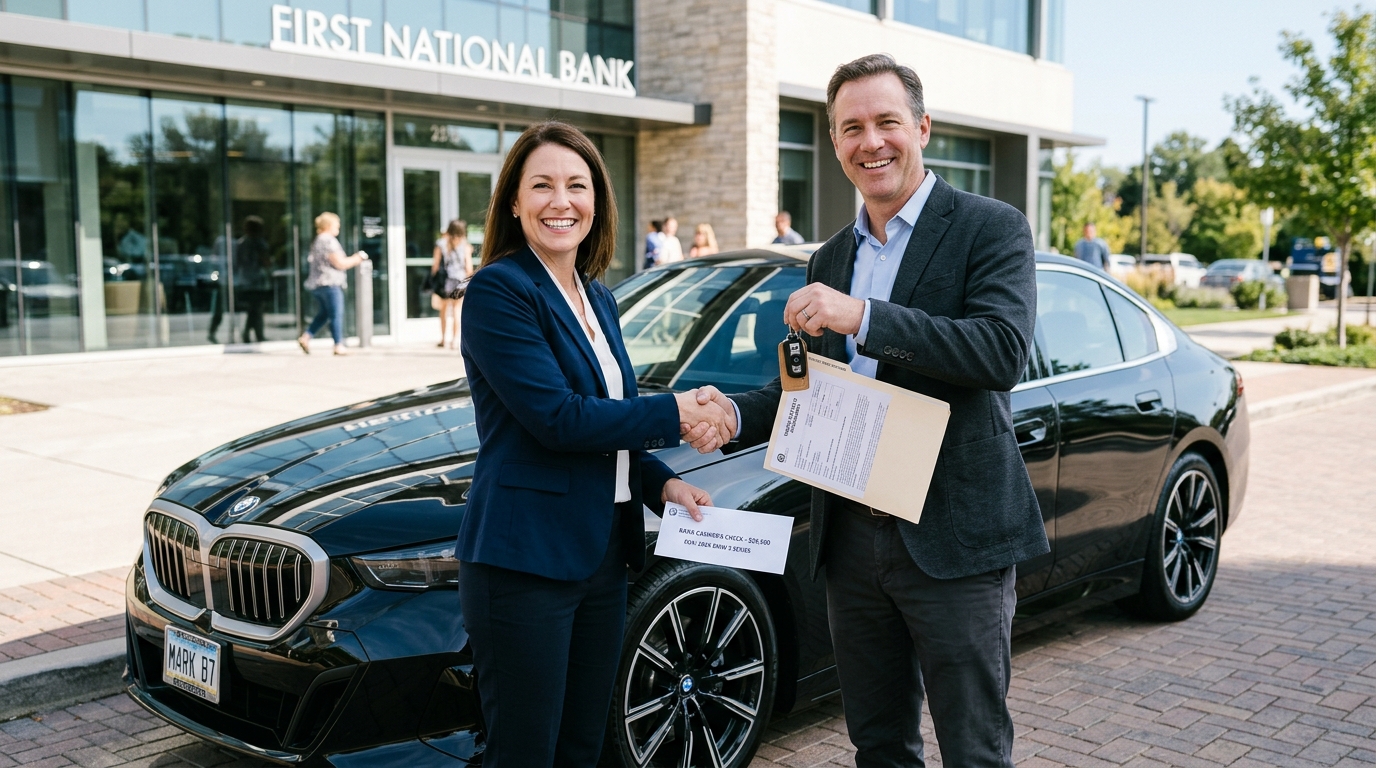
Step 3: Resolving Negative Equity in Private Sales. If you owe eighteen thousand dollars but sell the car privately for sixteen thousand dollars, you face a two-thousand-dollar deficit. The lender will not release the Certificate of Title until the full eighteen-thousand-dollar balance is satisfied. The most secure protocol is scheduling the closing transaction directly inside a local branch of your lending institution. The private buyer hands their certified funds to the bank teller, you pay the remaining two thousand dollar difference from personal savings, and the branch loan officer issues an immediate lien satisfaction letter, releasing the title directly into the buyer hands.
Title Transfers, Bill of Sale, and Legal Liability Release
The moment money changes hands is not the moment your legal responsibility for a vehicle terminates. Failing to file statutory release of liability paperwork with your state Department of Motor Vehicles (DMV) can leave you financially liable for subsequent parking tickets, bridge tolls, impound storage charges, and civil litigation if the new owner causes a collision before registering the car. Investigating vehicular collision liability, as handled by a commercial truck accident attorney, underscores that registered record owners are frequently named as primary defendants in multi-vehicle litigation until proven otherwise.
To insulate yourself from post-sale legal exposure, follow these statutory transfer protocols:
1. Certificate of Title Execution: Sign the title certificate in the designated seller transfer block using blue or black ink. Never use white-out or strike through an error, as altering a title document voids the certificate in most states, requiring a duplicate title application that delays the sale by several weeks. Verify whether your state mandates a notary public acknowledgment signature.
2. Universal Bill of Sale: Execute a comprehensive bill of sale signed by both parties. The document must state the complete seventeen-digit VIN, exact sale date, transaction price, buyer legal name, physical address, and an unambiguous as-is clause: "The vehicle is sold strictly as-is, with all faults, and without any warranties expressed or implied regarding mechanical condition or fitness for a particular purpose."
3. Federal Odometer Disclosure: Under National Highway Traffic Safety Administration (NHTSA) rules (49 CFR Part 580), vehicles under twenty years old mandate a certified federal odometer disclosure statement signed by both buyer and seller acknowledging the exact current mileage reading without alteration.
4. Mandatory Notice of Transfer and Release of Liability (NRL): Complete your state DMV release of liability filing within forty-eight hours of vehicle handover. In states like California (Form REG 138) and Texas (Form VTR-346), this can be submitted digitally online in five minutes. This critical electronic timestamp legally severs your ownership status, shielding you from any subsequent municipal fines, toll violations, or civil damages incurred by the buyer.
5. License Plate Protocol: Remove your personal license plates before releasing the vehicle to the buyer unless state statutes specifically dictate that plates remain with the vehicle registration. Retaining your plates protects against automated speed camera infractions and enables you to transfer remaining registration credit to your next vehicle or cancel your state vehicle registration cleanly.
Fraud Prevention: Avoiding Counterfeit Checks and Escrow Scams
The rise of digital marketplace platforms has spurred sophisticated payment fraud targeting private automobile sellers. The most prevalent threat is the counterfeit cashier check scam, which exploits the federal Expedited Funds Availability Act (Federal Reserve Regulation CC).
Under federal banking regulations, banks are generally required to make funds from cashier checks available to depositors within one to two business days. Fraudulent buyers provide an authentic-looking cashier check drafted on an out-of-state financial institution. The seller deposits the check, sees the funds credited to their available bank balance the following morning, and assumes the payment has cleared. The seller hands over the car and signs the title. However, fully verifying an out-of-state check between different banking clearinghouses takes seven to ten business days. When the check is ultimately identified as counterfeit, the bank reverses the provisional credit, pulling the entire amount out of the seller account. The seller is left without their vehicle and without the money.
To eliminate payment fraud risks entirely:
Never accept personal checks, mobile peer-to-peer app transfers (Venmo, Zelle, Cash App) for large automotive balances, or third-party international escrow sites. Conduct the final transaction directly inside the buyer bank branch, where a branch manager prints and verifies the cashier check in your direct visual presence. For remote buyers, use established, licensed automotive escrow services like KeySavvy or Escrow.com, which verify bank funds, authenticate legal identity, and safely coordinate electronic title transfers before releasing payment.
Prior to meeting any private party, arrange your appointment during daylight hours in a designated public safe exchange zone, frequently provided in municipal police department parking lots equipped with twenty-four-hour continuous video surveillance. Verify the buyer valid driver license before permitting a test drive, and accompany them in the front passenger seat throughout the evaluation route. Confirming that your safety equipment is functional, including checking that the spare tire is properly inflated by following standard spare tire maintenance checks, ensures a safe test drive for both parties.
Step-by-Step Tactical Blueprint to Maximize Your Vehicle Sale Price
Maximizing your net payout requires methodical mechanical, cosmetic, and digital preparation before listing your vehicle publicly:
1. Compile Comprehensive Service Records: Gather every dealership stamp, oil change receipt, brake replacement invoice, and tire rotation receipt from your glovebox. A documented maintenance history verified against a clean Carfax or AutoCheck vehicle history report can boost resale value by eight to twelve percent compared to an identical vehicle with an unrecorded service past. When buyers review used cars for sale inspection guides, detailed service documentation is universally cited as the number one trust builder.
2. Execute Low-Cost Cosmetic Remediation: Invest in a professional exterior wash, interior vacuuming, leather conditioning, and windshield glass polishing. Use touch-up paint to seal minor stone chips along the hood leading edge. Replace dead key fob batteries, headlight bulbs, and worn windshield wiper blades. Avoid undertaking major mechanical repairs (such as transmission rebuilds or major suspension overhauls), as private buyers rarely reimburse full repair costs dollar-for-dollar.
3. Stage Professional Vehicle Photography: Clean vehicles photographed against uncluttered backgrounds in soft morning or late afternoon golden-hour light attract three times more buyer inquiries. Capture at least twenty-five high-resolution images: front three-quarter view, profile sides, rear angle, engine bay, trunk space, tire tread depth, instrument cluster showing exact odometer mileage with the engine running, infotainment screen, and all seating rows.
4. Structure an Objective Listing Description: Write an informative, structured advertisement listing your vehicle exact trim, factory package codes, ownership history, maintenance highlights, tire condition, and clean title status. Explicitly state acceptable payment methods and test drive requirements to filter out unserious inquiries immediately.
5. Conduct Post-Sale Administrative Clean-Up: Once the transaction concludes, execute your post-sale checklist. Reset the onboard infotainment system to factory settings, unpairing your personal smartphone contacts and erasing programmed garage door codes and home GPS waypoints. Detach highway toll transponders from the windshield. Finally, contact your insurance agent to cancel coverage on the sold vehicle, preventing unnecessary premium charges and following standard auto insurance cancellation rules.
Frequently Asked Questions About Selling a Car
What is the safest way to accept payment when selling a car privately?
The safest payment method is conducting the transaction inside the buyer bank branch or your own bank branch. Having a teller verify cash funds or issue an official cashier check directly in your presence eliminates counterfeit checks and fraudulent mobile transfers. For remote transactions, a verified automotive escrow service guarantees payment clearance before you hand over keys and title.
How do I calculate the true market value of my car?
Calculate your vehicle value by comparing real-time valuation tools including Kelley Blue Book (KBB), Edmunds True Market Value, and National Automobile Dealers Association (NADA) guides. Enter your seventeen-digit Vehicle Identification Number (VIN) rather than generic year and trim to account for specific factory packages, exact mileage, regional demand, and documented accident history.
Can I sell a car if I still owe money on my auto loan?
Yes. Contact your lender to request an official ten-day payoff quote. If selling to a dealership or online retailer like CarMax or Carvana, they handle payoff paperwork and remit remaining equity to you. For private sales, complete the transaction at your lender branch so the buyer pays off the balance, securing an immediate lien release and clear title.
Does trading in a car save money on state sales tax?
In over forty-two US states, trading in a vehicle at a licensed dealership provides a sales tax credit. You only pay sales tax on the net difference between your new vehicle purchase price and your trade-in allowance. For example, trading in a twenty-thousand-dollar car in an eight percent sales tax jurisdiction reduces your tax bill by sixteen hundred dollars.
What paperwork is required to transfer a car title legally?
Legal title transfer requires signing the certificate of title according to state DMV guidelines, completing an odometer disclosure statement for vehicles under twenty years old, and providing a signed bill of sale with an explicit as-is clause. Crucially, the seller must immediately submit a Notice of Transfer and Release of Liability to the state DMV to terminate future liability.
What should I do immediately after selling my car?
Immediately after handing over the keys, remove your personal license plates unless state law dictates they remain with the vehicle. Detach automated highway toll transponders, delete personal Bluetooth pairings and GPS home addresses from the infotainment unit, notify your auto insurance company to terminate policy coverage, and file your DMV release of liability form.
Originally published and fact-checked at GeneralPedia.
