
Decoding modern digital shorthand can feel like deciphering an encrypted dialect. When someone sends you a three-letter abbreviation like PMO in an SMS thread, direct message, or group chat, the intended sentiment is rarely straightforward. Depending entirely on conversational syntax, social dynamics, and prepositional phrasing, PMO can communicate deep annoyance, an eager request for music or dating recommendations, a corporate organizational unit, or a behavioral recovery benchmark. Understanding what PMO means in text requires examining context clues, generational vocabulary, and the subtle mechanics of digital messaging etiquette.
Quick Summary: In text messaging and social media direct messages, PMO almost always stands for either "Pisses Me Off" (expressing frustration, anger, or irritation) or "Put Me On" (asking for an introduction, music recommendation, fashion tip, or social connection). The critical differentiator is syntax: if PMO is followed by the preposition "to" or "on" (such as "PMO to that playlist"), it means "Put Me On." If it appears standalone or describes an annoying behavior (such as "that traffic PMO so bad"), it means "Pisses Me Off."
The Dual Core Meanings: Pisses Me Off Versus Put Me On

The primary reason PMO triggers widespread communicative confusion is that its two most common slang interpretations represent completely opposite emotional polarities. One is a negative vent of exasperation, while the other is a positive or curious request for cultural or personal enrichment. Misinterpreting one for the other can turn a friendly conversation into an awkward misunderstanding.
The first and historically most widespread definition is Pisses Me Off. In casual mobile texting, this initialism acts as a rapid emotional venting mechanism. When a sender encounters a frustrating obstacle, a disrespectful coworker, sudden flight delays, or an irritating social interaction, typing PMO allows them to register emotional displeasure without spelling out vulgarity or composing a lengthy diatribe. The sentiment ranges from mild eye-rolling annoyance to intense, burning fury depending on surrounding punctuation and uppercase styling.
The second dominant definition, which surged rapidly through urban vernacular, hip-hop culture, and Gen Z social feeds across TikTok, Instagram, and Snapchat, is Put Me On. To put someone on is an idiomatic phrase meaning to introduce them to something desirable, introduce them to a mutual romantic interest, or share an exclusive tip. When a friend posts an unreleased audio snippet on an Instagram Story or showcases an aesthetic vintage jacket, a reply reading "Bro, PMO" translates directly to: please share the source, artist name, or store link with me.
Content Gap Analysis: How to Dissect Syntactic and Contextual Clues
Online glossaries often provide isolated dictionary definitions without explaining how human beings actually parse ambiguous abbreviations in real-time conversations. To accurately decipher what PMO means when it flashes onto your lock screen, you must evaluate three foundational linguistic markers: syntactic position, prepositional attachment, and accompanying emoji punctuation.
The first indicator is grammatical placement within the sentence. When PMO stands for Pisses Me Off, it functions almost exclusively as a transitive verb phrase. Because the word "me" is already baked directly into the acronym, it naturally attaches to a third-person subject or demonstrative pronoun. If the sentence begins with words like "that," "this," "he," "she," or "it," followed immediately by PMO, the negative emotional meaning is virtually guaranteed. For example, writing "That customer really pmo" follows standard verb conjugation where the acronym absorbs the action of causing anger.
Conversely, when PMO functions as Put Me On, it operates as an imperative command or polite request. The sender is entreating the recipient to perform an action. Consequently, it frequently appears at the very beginning of an utterance, often softened by polite markers or casual vocatives like "yo," "bro," "please," or "can you." Sentences structured like "Yo pmo" or "Can you pmo" are unambiguous requests for knowledge, contacts, or cultural introductions.
The second diagnostic test is prepositional coupling. Notice what happens when the preposition "to" enters the equation. In English syntax, one does not say "that pisses me off to that song." The phrasing is nonsensical. However, one routinely says "put me on to that song" or "put me on to that new restaurant." Therefore, the presence of the word "to" immediately following the acronym serves as an ironclad syntactic guarantee that the sender means Put Me On. Similarly, prepositional pairings like "pmo with" (as in "pmo with your graphic designer friend") also confirm the recommendation meaning.
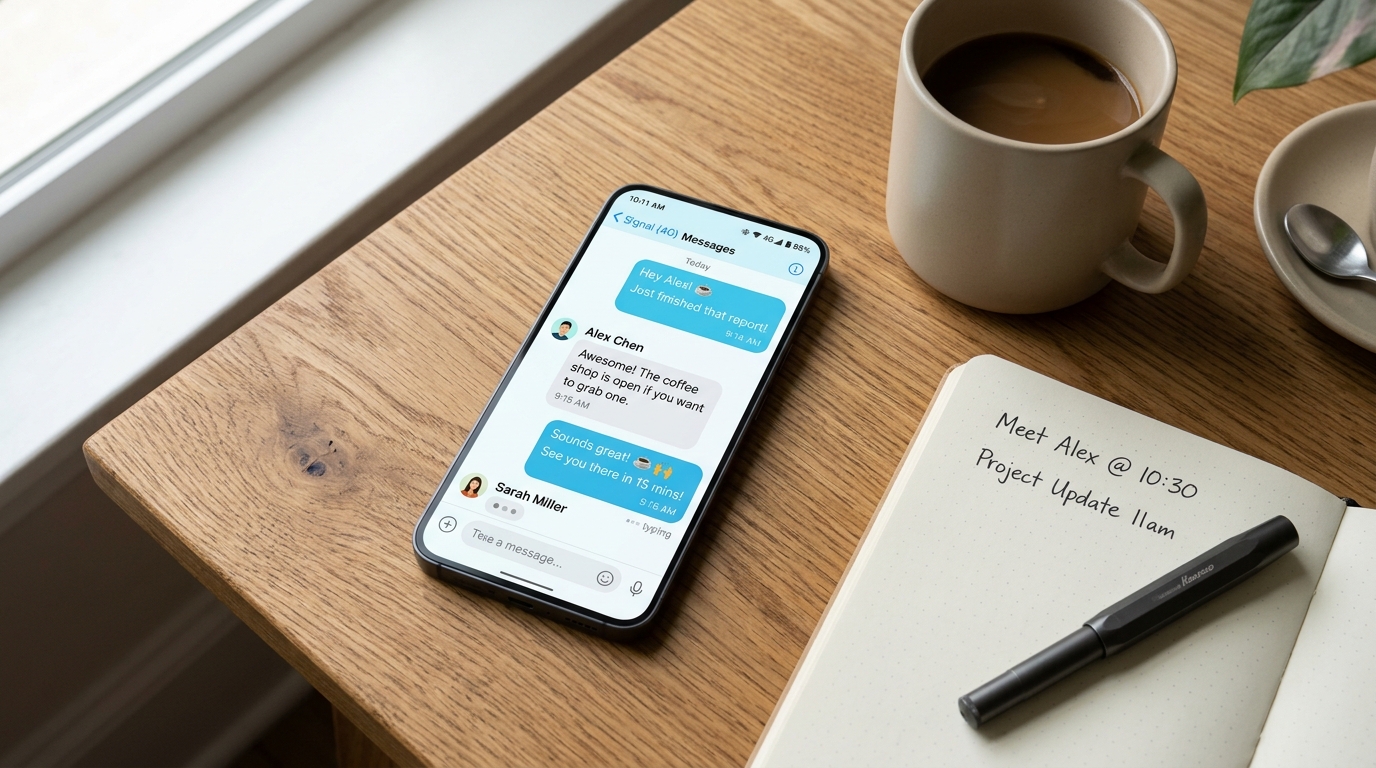
The third context clue rests within accompanying emojis and emotional tone markers. Digital communication lacks facial expressions, pitch, and vocal cadence, forcing texters to rely on auxiliary symbols. A message reading "Bro pmo" accompanied by an eye-roll emoji, skull emoji, or steam-from-nose face indicates frustration. In contrast, the same three letters followed by fire emojis, crying-laughing faces, or wide eyes indicates enthusiastic appreciation and a demand for product details or media links.
Historical Linguistics: The Cyberpragmatic Evolution of Texting Acronyms
To fully appreciate how PMO evolved into its present status, one must look at the technological history of digital typography. In the early era of cellular telecommunications, Short Message Service (SMS) protocols imposed an unyielding limit of 160 characters per transmission. Furthermore, mobile phones utilized physical numeric keypads requiring multi-tap T9 entry, where typing the letter "S" demanded pressing the number 7 four consecutive times. Under these constraints, vowel deletion and initialisms emerged not as stylistic slang, but as economic survival mechanisms to save time and character fees.
As smartphones introduced QWERTY touch keyboards, predictive text autocorrect, and unlimited data packages through iMessage and WhatsApp, the functional utility of abbreviations underwent a profound psychological shift. Rather than saving keystrokes, abbreviations evolved into social signifiers and tone modulators. Sociolinguists categorize this phenomenon under cyberpragmatics: the study of how internet users communicate subtle social cues, interpersonal warmth, irony, or aloof detachment through informal orthography.
In contemporary youth dialect, typing complete, grammatically pristine sentences with capitalized initials and terminal periods can inadvertently communicate coldness, passive aggression, or excessive formality. Conversely, typing in all lowercase with abbreviated initialisms like "pmo," "idk," or "tbh" communicates casual intimacy, psychological safety, and effortless social belonging. Thus, when someone types "that pmo" instead of "that action irritated me deeply," they are actively selecting an informal register designed to keep the interpersonal dynamic relaxed and conversational.
Punctuation, Capitalization, and Emotional Inflection
Typography in mobile messaging operates as the digital equivalent of vocal acoustics. The exact same acronym can project radically distinct volumes and intensities depending on typography and punctuation choices:
- All Lowercase ("pmo"): Represents standard, everyday informal expression. When typed as "that pmo," it indicates conversational irritation without theatrical drama. When typed as "pmo to that song," it communicates an easygoing, friendly inquiry.
- All Uppercase ("PMO"): Signals high emotional volume and immediate urgency. A text reading "THAT PMO SO MUCH" conveys explosive anger or intense shock. Alternatively, "PMO RIGHT NOW" indicates extreme excitement over an incredible track or must-see fashion drop.
- The Passive-Aggressive Terminal Period ("pmo."): In modern texting conventions among digital natives, affixing a full stop or period to a standalone acronym adds an icy, definitive finality. A text stating "She really pmo." communicates that the sender is shut down emotionally and deeply hurt or offended.
- Trailing Ellipsis ("pmo..."): Connotes weary disbelief, emotional exhaustion, or disbelief that an irritating event occurred yet again. It suggests the sender is at a loss for words.
- Multiple Question Marks ("pmo??"): Expresses utter bewilderment or confusion. If someone responds to a shared story with "pmo??", they may be asking why you are behaving frustratingly, or asking if you are seriously refusing to share an introduction.
Top 10 Texting Acronyms Compared: Decoding Gen Z and Modern Chat Dialects
PMO does not exist in isolation. It belongs to an evolving ecosystem of digital initialisms that younger demographics, mobile gamers, and social media creators use to condense complex thoughts into micro-keystrokes. To master contemporary texting etiquette, one must understand how PMO interfaces with related acronyms like WYLL, ASL, NFS, and GNG.
Platform Specific Nuances: Snapchat, TikTok, Instagram, and Discord

Digital slang does not spread uniformly across the internet. Different social networks harbor distinct communicative conventions, which subtly shifts the dominant meaning of PMO depending on where the text appears.
On Snapchat, where interactions are intimate, visual, and rapid-fire, PMO is predominantly used in private direct snaps and captions to express annoyance over real-time personal inconveniences. A friend sending a snap of a flat tire or an empty grocery shelf with the caption "This pmo" is using the platform as a spontaneous venting outlet. However, if a user posts a photo of an aesthetic outfit or a stylish acquaintance on their private Snapchat Story with the text "Somebody pmo," they are soliciting an introduction or brand link from their friend circle.
On TikTok and Instagram, comment sections and algorithmic recommendation feeds favor the Put Me On definition. When content creators post viral styling guides, culinary recipes, undisclosed travel locations, or background instrumental beats, viewers frequently flood the comments with phrases like "Please PMO to this jacket" or "PMO to the sound." In this algorithmic context, PMO functions as digital currency for discovery, urging the creator to credit the source or tag the vendor.
Within Discord and online gaming communities, PMO shifts back toward competitive frustration. Gamers dealing with server latency, toxic teammates, or dropped internet connections frequently drop "pmo" into voice channel text chats to summarize in-game grievances without pausing their gameplay to type extended sentences.
Cross-Generational Glossary: Deciphering Sibling Acronyms and Emerging Slang
To fully navigate mobile texting culture, one must understand how PMO connects with other popular vernacular terms across different generations. The digital lexicon is constantly expanding, creating an informal linguistic bridge between high school classrooms, collegiate dormitories, and online creator communities:
- Delulu: A playful derivative of "delusional," describing someone who holds wildly unrealistic romantic expectations or irrational optimism. For example, texting "I am so delulu thinking he is going to text back immediately" acknowledges one's own wishful thinking with self-deprecating humor.
- Cap and No Cap: Borrowed from hip-hop culture, "cap" denotes falsehood, fabrication, or exaggeration, while "no cap" asserts absolute truthfulness. Texting "That teacher is lying, total cap" accuses someone of being dishonest, whereas "I finished the entire essay in one hour, no cap" emphasizes genuine accomplishment.
- Rizz: Short for charisma, rizz refers to one's innate ability to attract, charm, or flirt effortlessly with romantic interests. Achieving "unspoken rizz" means captivating someone through mere body language and presence without having to say a word.
- Crash Out: Describes an individual who loses emotional composure entirely, acting out with reckless anger or self-destructive behavior over a relatively minor provocation. Someone saying "He crashed out after losing that video game" means he threw his controller or started screaming.
- Rent Free: Originating from sports commentary and psychological observation, this phrase describes a person, memory, or annoying incident that perpetually dominates someone's thoughts without any productive reason. Saying "That embarrassing comment lives in my head rent free" indicates persistent rumination.
- Main Character Energy: Refers to an individual who conducts themselves with dramatic flair, intense confidence, and an underlying presumption that the world revolves around their personal life narrative.
- Dating Lexicon (Ghosting, Soft Launch, Hard Launch): Modern relationship texting has established formal rituals. "Ghosting" means abruptly severing all digital communication without warning. A "soft launch" is posting a photograph showing only a partner's hand, watch, or silhouette on social media to tease a new relationship without revealing identity. A "hard launch" is posting a clear, tagged portrait announcing the partnership officially.
Sociolinguistic Matrix: How to Respond to PMO Across Different Social Scenarios
Knowing what PMO means is only half the battle; knowing how to respond naturally preserves conversational harmony. Here are authentic dialogue templates for four common texting scenarios:
Scenario 1: A Friend Venting Annoyance ("That driver really pmo")
Intent: The sender is expressing frustration and seeking validation or emotional empathy.
Recommended Responses:
- "Nah fr people cannot drive in the rain, are you good?"
- "Smh that would irritate me so bad too, take a deep breath."
- "What happened?? Spill the story."
Scenario 2: An Acquaintance Asking for a Recommendation ("Can you pmo to that playlist?")
Intent: The sender admires your taste in music, fashion, or food and wants you to share details.
Recommended Responses:
- "Got you, here is the Spotify link right here."
- "Bet, the artist is called Kaytranada, listen to track three first."
- "Say less, sending the direct storefront link now."
Scenario 3: A Peer Asking for a Social or Dating Introduction ("Bro pmo with her")
Intent: The sender is romantically interested in someone in your social circle and wants your endorsement.
Recommended Responses:
- "I will ask her first if she is open to connecting and let you know."
- "Haha she is actually seeing someone rn, sorry bro."
- "Bet, drop your @ and I will mention you next time we hang out."
Professional and Niche Definitions: Beyond the Slang Lexicon
Outside the sphere of social media and casual interpersonal texting, PMO carries entirely separate, formalized meanings within business, medical, and behavioral health communities. Contextual boundaries are paramount when encountering this acronym in work emails or support forums.
In corporate environments, technology firms, and enterprise governance, PMO almost universally stands for Project Management Office. A Project Management Office is a specialized department or operating division within an organization that establishes project management standards, monitors workflow governance, oversees project budgets, and ensures consistency across cross-functional enterprise initiatives. If your department manager or team lead sends an email or Slack message mentioning "the PMO meeting tomorrow" or asking to "route the proposal through PMO," they are referencing organizational project management frameworks, not slang.
In psychological, wellness, and addiction recovery terminology, particularly within digital health communities like NoFap and mindfulness habit-tracking forums, PMO represents Porn, Masturbation, Orgasm. In this specialized psychological context, the acronym refers to the behavioral cycle associated with internet pornography consumption and dopamine pathway dysregulation. Participants in habit reformation challenges track milestones like being 30 days or 90 days PMO-free to signify progress in neurological recovery and self-regulation.
Additional niche technical definitions include Prime Minister Office in international political diplomacy, Practice Management Organization in healthcare administration, and Principal Medical Officer in military and maritime health services. In financial trading, it occasionally represents Price Momentum Oscillator, an analytical technical indicator developed by financial technicians to gauge trend momentum.
Texting Etiquette: When and How to Use PMO Correctly
Deploying digital shorthand effectively requires emotional intelligence and an understanding of conversational boundaries. Because PMO is colloquial and potentially confusing, follow these tactical rules when writing or responding to texts:
- Always supply prepositions when asking for recommendations: If you want a friend to share a link, artist, or introduction, always write "pmo to" rather than just "pmo." Adding the word "to" prevents the recipient from mistakenly assuming you are irritated with them.
- Avoid PMO in professional correspondence: Never use slang acronyms in client communications, corporate Slack channels, or executive emails. While corporate colleagues understand Project Management Office, using PMO as "pisses me off" in a workplace setting violates professional decorum.
- Leverage emoji clarification: If venting frustration to a close friend, pair "that pmo" with an expressive emoji like an eye-roll or skull to ensure your tone is read as lighthearted venting rather than hostile confrontation.
- Assess the generational demographic: Older recipients may not recognize Gen Z texting initialisms and could either ask for clarification or misunderstand the abbreviation entirely. Reserve conversational abbreviations for peers familiar with modern chat vernacular.
- Respect interpersonal boundaries with romantic requests: When using PMO to request a romantic introduction to a friend of a friend, ensure your tone remains respectful and non-entitled. Social introductions require mutual consent.
Frequently Asked Questions About PMO in Texting
What are the two most common meanings of PMO in text messages?
The two most common meanings of PMO in text messages are "Pisses Me Off" and "Put Me On." "Pisses Me Off" expresses frustration, anger, or annoyance over an irritating situation or behavior. "Put Me On" is an informal request asking someone to introduce you to a person, recommend a song, or share where they purchased a product.
How can I tell if PMO means Pisses Me Off or Put Me On?
You can determine the intended meaning by checking sentence structure and prepositions. If PMO is followed by "to" or "on" (such as "PMO to that song"), it means "Put Me On." If PMO is preceded by a subject or demonstrative pronoun (such as "that really PMO" or "he PMO"), it means "Pisses Me Off."
What does PMO mean on TikTok and Snapchat?
On TikTok and Instagram comment sections, PMO most frequently means "Put Me On," where users ask creators to reveal the brand, audio track, or location featured in a video. On Snapchat private chats, it frequently means "Pisses Me Off" when friends complain about daily inconveniences, though it is also used on stories to request dating or social introductions.
Does PMO have a professional corporate meaning?
Yes. In professional business environments and workplace communications, PMO stands for Project Management Office. It refers to the organizational department responsible for standardizing project execution, defining workflow governance, and monitoring enterprise milestones across teams.
What does WYLL mean when someone texts it to you?
WYLL stands for "What You Look Like." It is commonly sent on Snapchat, dating apps, or anonymous messaging platforms when a user wants to know your physical appearance and is asking you to send a picture, selfie, or face snap.
Is PMO considered rude or inappropriate in casual conversation?
In casual conversations with close friends, PMO is not considered rude because it serves as standard informal shorthand. However, because the negative form incorporates profanity ("pisses me off"), it should be avoided in formal workplaces, academic settings, or when communicating with elders and professional clients.
Originally published and fact-checked at GeneralPedia.
