
Doxycycline is one of the most versatile, reliable, and widely prescribed broad-spectrum antibacterial medications in contemporary clinical medicine. Belonging to the tetracycline antimicrobial class, it serves as a frontline therapeutic agent across dermatology, pulmonology, infectious disease, and travel medicine. Whether eradicating stubborn cystic acne, neutralizing tick-borne pathogens before chronic complications arise, treating atypical respiratory tract infections, or reducing inflammatory papules in rosacea, understanding what doxycycline is used for requires examining its dual antibacterial and anti-inflammatory properties, proper administration techniques, and critical nutritional interactions.
Clinical Summary: Doxycycline is a broad-spectrum, bacteriostatic tetracycline antibiotic that halts bacterial proliferation by binding to the 30S ribosomal subunit and inhibiting protein synthesis. At standard antibacterial doses (100 mg once or twice daily), it treats acne vulgaris, Lyme disease, Rocky Mountain spotted fever, chlamydia, and atypical pneumonia. At sub-antimicrobial doses (20 mg to 40 mg daily), it functions exclusively as an anti-inflammatory enzyme inhibitor for rosacea and adult periodontitis without inducing bacterial drug resistance.
Pharmacological Mechanism: How Doxycycline Operates in the Human Body
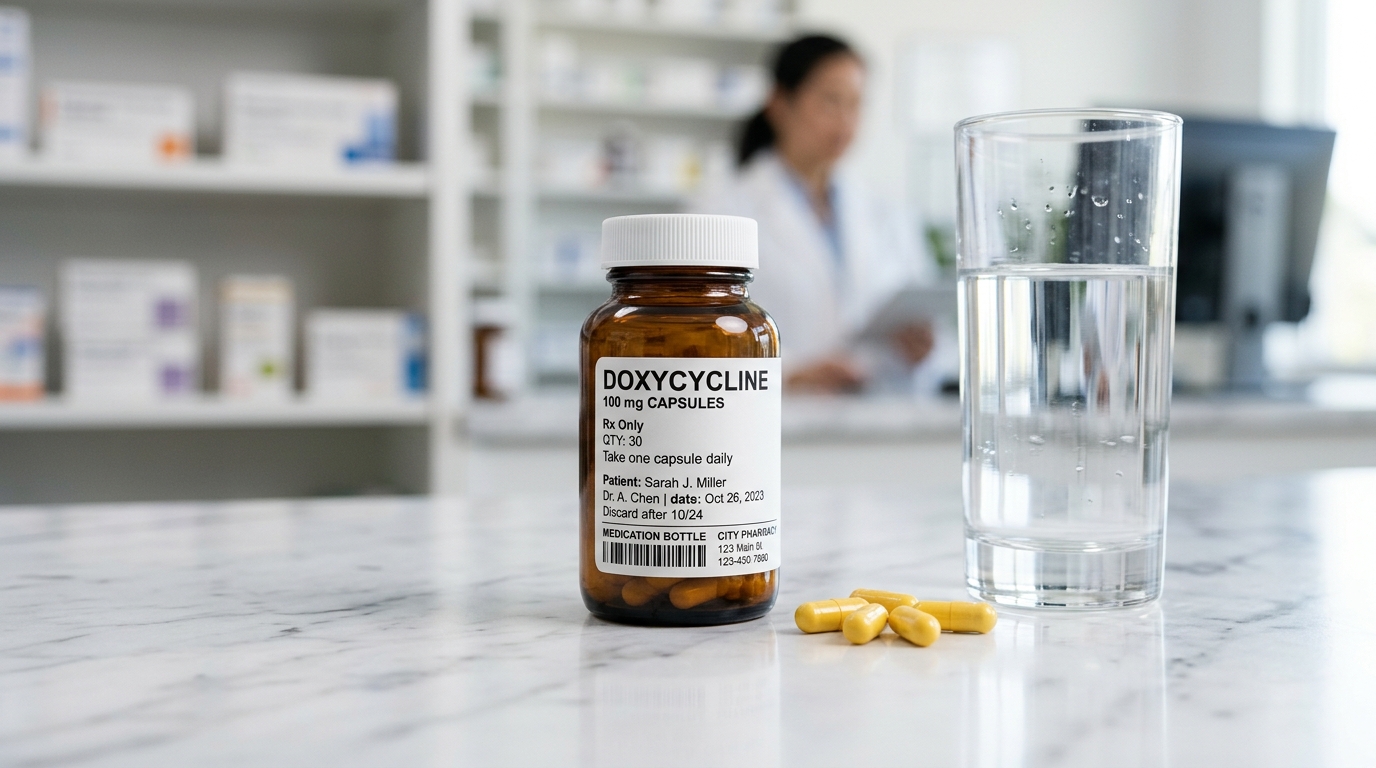
To appreciate the vast array of conditions doxycycline treats, one must examine its distinct pharmacological mechanism of action. Unlike bactericidal antibiotics such as penicillins and cephalosporins that actively rupture bacterial cell walls, doxycycline is primarily bacteriostatic. It penetrates susceptible Gram-positive and Gram-negative microbial cell membranes through passive diffusion and active transport mechanisms. Once inside the bacterial cytoplasm, it reversibly binds to the 30S ribosomal subunit. This binding blocks the access of aminoacyl-tRNA to the ribosomal acceptor site, effectively shutting down bacterial protein synthesis and preventing the microorganism from reproducing, repairing its structure, or releasing pathological toxins.
Beyond its antimicrobial prowess, doxycycline possesses a remarkable secondary pharmacological ability: non-antibiotic anti-inflammatory tissue remodeling. It directly inhibits matrix metalloproteinases, particularly collagenase (MMP-8) and gelatinase (MMP-9), which are destructive enzymes responsible for connective tissue breakdown, vascular erythema, and granulomatous inflammation. Furthermore, it downregulates pro-inflammatory cytokines such as interleukin-1 beta and tumor necrosis factor alpha while suppressing neutrophil chemotaxis. This unique dual identity allows clinicians to prescribe doxycycline at standard bactericidal concentrations to eliminate pathogens, or at lower sub-antimicrobial thresholds to quiet inflammatory skin and gum conditions without disrupting beneficial commensal microbiota.
Dermatological Applications: Acne Vulgaris and Rosacea Protocols

In outpatient dermatology, doxycycline represents one of the most frequently prescribed systemic therapies. Acne vulgaris develops through a complex cascade involving follicular hyperkeratinization, excess sebum production, colonization by Cutibacterium acnes, and localized inflammatory cascades. When topical agents such as benzoyl peroxide, salicylic acid, and topical retinoids prove insufficient to control painful inflammatory papules, pustules, and deep nodules, systemic doxycycline provides rapid internal anti-inflammatory relief.
Modern clinical guidelines strictly emphasize that oral antibiotics for acne should never serve as indefinite monotherapy. Current American Academy of Dermatology guidelines recommend limiting oral doxycycline therapy to a targeted window of 8 to 12 weeks while simultaneously initiating topical retinoids and benzoyl peroxide. Benzoyl peroxide exerts bactericidal oxidative pressure without allowing resistance to develop, thereby safeguarding doxycycline efficacy and preventing the emergence of antibiotic-resistant bacterial strains.
For papulopustular rosacea, doxycycline demonstrates remarkable clinical elegance through sub-antimicrobial dose formulations (such as 40 mg modified-release capsules containing 30 mg immediate-release and 10 mg delayed-release beads). At this low plasma concentration, the drug stays well below the minimum inhibitory concentration required to exert selective antimicrobial pressure on skin, oral, or gut flora. However, it completely blocks the inflammatory enzymatic pathways that trigger painful facial flushing, telangiectasias, and pustular eruptions. Patients achieve clear facial skin without enduring the gastrointestinal upset, vaginal candidiasis, or bacterial resistance risks associated with high-dose antibiotic regimens.
Tick-Borne Diseases: Lyme Disease, Anaplasmosis, and Spotted Fevers
In geographic regions populated by deer ticks (Ixodes scapularis and Ixodes pacificus), doxycycline is the undisputed gold standard for tick-borne infection control. The spirochete Borrelia burgdorferi causes Lyme disease, which initially manifests as an expanding circular rash known as erythema migrans, accompanied by flu-like chills, arthralgia, neck stiffness, and profound fatigue. If caught in its early localized stage, an oral course of doxycycline 100 mg twice daily for 10 to 14 days achieves cure rates exceeding 95%, preventing debilitating long-term complications including Lyme carditis, facial palsy, and chronic migratory arthritis.
Furthermore, in cases where a patient discovers an engorged deer tick attached to their skin for greater than 36 hours in an endemic transmission zone (such as New England, the Mid-Atlantic, or the upper Midwest), medical guidelines endorse single-dose post-exposure prophylaxis. Administering a single 200 mg dose of doxycycline within 72 hours of tick removal reduces the overall risk of developing clinical Lyme disease by up to 87%.
Doxycycline is also the absolute frontline treatment of choice for life-threatening rickettsial infections, most notably Rocky Mountain spotted fever caused by Rickettsia rickettsii, as well as human granulocytic anaplasmosis and ehrlichiosis. In Rocky Mountain spotted fever, which is transmitted by the American dog tick or Rocky Mountain wood tick, vascular endothelial destruction progresses rapidly, carrying a mortality rate up to 20% if left untreated. Crucially, the Centers for Disease Control and Prevention explicitly recommends immediate presumptive treatment with doxycycline for suspected Rocky Mountain spotted fever in patients of all ages, including infants and young children, because therapeutic delay significantly elevates fatal outcomes.
Respiratory Tract and Sexually Transmitted Infections
Beyond the skin and tick-borne diseases, doxycycline occupies a critical position in respiratory and urogenital medicine. In pulmonology, it is recognized as a premier first-line outpatient oral option for mild-to-moderate community-acquired pneumonia in adults without significant comorbidities. It provides outstanding coverage against atypical respiratory pathogens that lack cell walls, such as Mycoplasma pneumoniae (the primary driver of walking pneumonia) and Chlamydia pneumoniae, as well as common Gram-positive pathogens like Streptococcus pneumoniae.
In sexual health and reproductive medicine, the Centers for Disease Control and Prevention updated its treatment guidelines to position oral doxycycline 100 mg twice daily for 7 days as the preferential first-line therapy for uncomplicated genital, rectal, and pharyngeal Chlamydia trachomatis infections, superseding single-dose azithromycin due to higher microbiological cure rates. It also serves as a crucial component of multidrug regimens for pelvic inflammatory disease, non-gonococcal urethritis, epididymitis, and as an essential alternative for early and late latent syphilis in non-pregnant penicillin-allergic patients.
In international travel medicine, doxycycline is widely deployed as oral chemoprophylaxis against chloroquine-resistant Plasmodium falciparum malaria. Travelers take 100 mg daily starting one to two days before entering a malaria-endemic region, continuing daily throughout their stay, and sustaining the regimen for 28 consecutive days after leaving the transmission zone.
Renal and Hepatic Metabolism: Dosing in Special Populations
A critical pharmacological feature setting doxycycline apart from older tetracyclines (such as tetracycline hydrochloride and oxytetracycline) is its pharmacokinetic clearance route. Older tetracyclines depend primarily on renal filtration for elimination from the human body. When patients with compromised renal function or chronic kidney disease ingest older tetracyclines, drug metabolites accumulate rapidly in systemic circulation, precipitating severe azotemia, hyperphosphatemia, acidosis, and acute uremic crises.
Doxycycline, by contrast, is predominantly eliminated through non-renal pathways. Approximately 80% to 90% of a systemic doxycycline dose is excreted via the biliary system into the gastrointestinal tract or converted into biologically inactive chelate complexes within the intestinal mucosa, ultimately exiting the body through feces. Only a modest 10% to 20% fraction undergoes urinary excretion. Consequently, doxycycline does not accumulate in patients with reduced glomerular filtration rates. Pharmacokinetic studies confirm that serum half-life remains virtually identical (18 to 22 hours) between healthy individuals and patients with end-stage renal disease on maintenance hemodialysis. Therefore, clinicians do not need to adjust dosages or alter dosing intervals for patients with renal impairment, making it uniquely safe for elderly populations or individuals with underlying nephropathy.
Regarding hepatic metabolism, doxycycline undergoes partial biotransformation in the liver. Clinicians must exercise caution when prescribing doxycycline alongside medications that induce hepatic microsomal enzymes, specifically cytochrome P450 systems. Anticonvulsant drugs such as carbamazepine, phenytoin, and phenobarbital, as well as chronic heavy alcohol consumption, significantly accelerate doxycycline enzymatic degradation. This metabolic induction shortens the drug elimination half-life from 20 hours down to less than 11 hours, resulting in sub-therapeutic blood levels and treatment failure. In such cases, clinicians must either double the daily dosing frequency or select an alternative antimicrobial agent.
Comparative Analysis: Cephalexin, Azithromycin, and Doxycycline Clinical Decisions
When patients visit an outpatient clinic, urgent care center, or emergency department for acute infections, physicians frequently choose among three ubiquitous oral antibiotics: doxycycline, cephalexin, and azithromycin. Deciding which drug to prescribe depends on whether the infection is cutaneous, respiratory, or tick-related:
Content Gap Analysis: Formulations, Pill-Induced Esophagitis, and Chelation Traps

A major shortcoming of basic online medication summaries is failing to educate patients on the profound physiological differences between salt formulations and the physical administration mechanics that prevent devastating gastrointestinal injury. Understanding these subtle distinctions is essential for safe patient care.
First, consider the biochemical difference between doxycycline hyclate and doxycycline monohydrate. Doxycycline hyclate is an acidic, highly water-soluble hydrochloride salt with an intrinsic pH between 1.8 and 3.3. Due to its intense acidity, if a hyclate capsule lodges against the esophageal mucosa, it causes rapid, caustic chemical erosion. In contrast, doxycycline monohydrate is a base monohydrate salt that is significantly less acidic and dissolves more gradually in the gastric reservoir. Consequently, monohydrate formulations produce substantially lower incidences of upper gastrointestinal distress and esophageal burning, making them preferable for patients with sensitive stomachs, gastroesophageal reflux disease, or prior pill dysphagia.
Second, clinicians must emphasize the prevention of pill-induced esophagitis and esophageal ulceration. When a patient swallows a doxycycline capsule with only a small sip of water or takes their pill immediately before lying down in bed, peristaltic transit can stall in the mid-esophagus where the aortic arch naturally compresses the esophageal lumen. The gelatin capsule dissolves against the mucosal lining, releasing highly acidic, caustic drug granules that burn deep ulcerations into the squamous epithelium within hours. Patients experience agonizing retrosternal chest pain, painful swallowing (odynophagia), and difficulty swallowing (dysphagia). To completely eliminate this risk, patients must swallow doxycycline with a full 8-ounce glass of plain water and remain standing or sitting upright for at least 30 minutes before lying down.
Third, patients must navigate the multivalent cation chelation trap. Doxycycline molecules possess electron-rich chemical structures that avidly bind to positively charged polyvalent metallic cations, including calcium, magnesium, aluminum, iron, and zinc. When a patient takes doxycycline concurrently with cow milk, yogurt, calcium-fortified orange juice, antacids, or iron supplements, the medication chemically bonds with the mineral ions, forming an insoluble, unabsorbable chelate complex in the gut lumen. This chemical reaction reduces systemic antibiotic bioavailability by 50% to 85%, completely neutralizing the medication and allowing bacterial infections to flourish unchecked. To protect absorption, patients must separate doxycycline doses from dairy products, antacids, and mineral supplements by at least two hours before or two to three hours after ingestion.
Top 10 Outpatient Medications Compared: Therapeutic Landscape
Patients researching doxycycline frequently encounter related prescription medications across antibiotics, cardiovascular agents, allergy drugs, and neurological stabilizers. To provide comprehensive clinical context, the following master comparison table outlines ten of the most widely prescribed outpatient drugs in modern healthcare:
Safety Profile: Photosensitivity, Pregnancy, and Pediatrics
While doxycycline boasts an outstanding overall safety track record across decades of clinical use, healthcare providers and patients must navigate several specific physiological contraindications and adverse reaction profiles.
One of the most frequent adverse effects is severe drug-induced photosensitivity. Doxycycline accumulates within cutaneous tissues, where exposure to ultraviolet A (UVA) radiation from sunlight or tanning booths triggers photochemical cell destruction and free radical generation. Patients can develop blistering, fiery red erythema resembling second-degree sunburns after mere minutes of normal outdoor daylight exposure. In severe instances, photo-onycholysis (separation of the nail plate from the nail bed) occurs. Patients taking doxycycline must apply broad-spectrum sunscreen with a sun protection factor (SPF) of 50 or higher, wear protective UV clothing, and avoid direct tanning lamps throughout treatment.
In obstetrics and pediatric medicine, historical tetracyclines carried notorious warnings regarding intrinsic tooth staining and bone growth inhibition. Tetracyclines cross the placenta and chelate directly with calcium orthophosphate in developing teeth and bones, leading to permanent yellow-gray-brown discoloration of dental enamel and hypoplasia. Consequently, doxycycline remains contraindicated during the second and third trimesters of pregnancy (FDA Pregnancy Category D) and during breastfeeding.
However, modern pediatric pharmacovigilance data has dramatically reshaped clinical guidelines for children under 8 years of age. Research conducted by the Centers for Disease Control and Prevention demonstrated that short-term doxycycline courses (under 21 days) bind significantly less avidly to calcium than older tetracyclines and do not cause detectable dental staining or enamel defects in children. As a result, medical guidelines now endorse short-term doxycycline as the essential treatment for life-threatening tick-borne illnesses like Rocky Mountain spotted fever and Lyme disease in pediatric patients of all ages.
Additional safety considerations include the Jarisch-Herxheimer reaction, an acute systemic response occurring within 2 to 24 hours after initiating treatment for spirochetal infections such as Lyme disease or syphilis. As massive numbers of bacterial cells die, endotoxins and microbial antigens flood the bloodstream, triggering transient fever, chills, tachycardia, flushing, and exacerbation of existing skin lesions. Clinicians reassure patients that this reaction represents therapeutic effectiveness rather than an allergic drug reaction. Finally, as with all broad-spectrum systemic antimicrobials, patients must remain vigilant for watery, profuse diarrhea indicative of Clostridioides difficile colitis, which requires prompt medical evaluation and immediate drug discontinuation.
Actionable Patient Playbook: How to Take Doxycycline for Maximum Efficacy
To optimize infection clearance while safeguarding digestive and cutaneous health, patients should implement the following verified clinical administration protocols:
- Always take with a full 8-ounce glass of water: Adequate fluid volume ensures rapid esophageal transit into the gastric basin, completely preventing caustic pill-induced esophagitis.
- Maintain an upright posture for at least 30 minutes: Never ingest doxycycline immediately before lying down, reclining on a sofa, or going to sleep at night. Stay standing or seated upright to let gravity protect your esophagus.
- Manage stomach upset with non-dairy food: While doxycycline absorption is optimal on an empty stomach, mild gastric irritation is common. If nausea occurs, take your dose with a light meal such as toast, crackers, or a banana, but strictly avoid high-calcium dairy items.
- Enforce the two-hour mineral separation window: Separate your doxycycline dose by at least two hours before or two to three hours after ingesting milk, cheese, yogurt, calcium-enriched juices, multivitamin tablets, iron supplements, magnesium, or antacids.
- Apply daily broad-spectrum SPF 50 sunscreen: Shield exposed facial skin, neck, arms, and hands from ambient UVA rays to prevent acute phototoxic erythema, even on overcast or cloudy days.
- Complete the entire prescribed regimen: Never discontinue your antibiotic course prematurely simply because initial symptoms resolve. Premature termination allows surviving resilient bacteria to rebound, promoting chronic recurrence and antibiotic resistance.
- Separate probiotic supplements by three hours: If consuming probiotics to support gut microbiome diversity, take them at least two to three hours apart from your doxycycline dose so the antibiotic does not neutralize the beneficial bacterial cultures.
Frequently Asked Questions About Doxycycline
What are the most common medical conditions treated with doxycycline?
Doxycycline is most commonly prescribed to treat moderate to severe acne vulgaris, Lyme disease, Rocky Mountain spotted fever, chlamydia infections, atypical bacterial pneumonia, and papulopustular rosacea. It is also used as a preventative prophylactic medication against malaria for international travelers.
Why must you sit or stand upright for 30 minutes after taking doxycycline?
You must remain upright for at least 30 minutes to prevent pill-induced esophagitis. If a doxycycline tablet or capsule lodges against the esophageal wall, its acidic chemical composition causes rapid mucosal erosion, resulting in severe esophageal ulcerations, chest pain, and painful swallowing.
Can you eat dairy products or take vitamins with doxycycline?
Dairy products containing calcium (such as milk, yogurt, and cheese) as well as antacids, iron, magnesium, and zinc supplements bind chemically to doxycycline in the digestive tract. This chelation process blocks drug absorption by up to 80%. You should separate doxycycline from dairy and mineral supplements by at least two to three hours.
What is the difference between doxycycline hyclate and doxycycline monohydrate?
Doxycycline hyclate is a water-soluble hydrochloride salt that is significantly more acidic, carrying a higher potential for stomach upset and esophageal irritation. Doxycycline monohydrate is a base salt that dissolves more gradually, making it gentler on the gastric lining and preferred for patients with acid reflux or sensitive stomachs.
Does doxycycline cause severe sun sensitivity?
Yes. Doxycycline causes phototoxicity by accumulating in skin tissue and reacting with ultraviolet A (UVA) light. This makes skin exceptionally prone to rapid, painful sunburns and blistering after brief outdoor exposure. Patients taking doxycycline must wear protective clothing and apply broad-spectrum SPF 50 sunscreen daily.
Can pregnant women or young children safely take doxycycline?
Doxycycline is contraindicated during the second and third trimesters of pregnancy due to the risk of permanent fetal tooth discoloration and bone growth inhibition. However, for young children under 8 years old, short-term courses (under 21 days) are now considered safe by the CDC for life-threatening conditions like Rocky Mountain spotted fever and Lyme disease without causing dental staining.
Originally published and fact-checked at GeneralPedia.
