
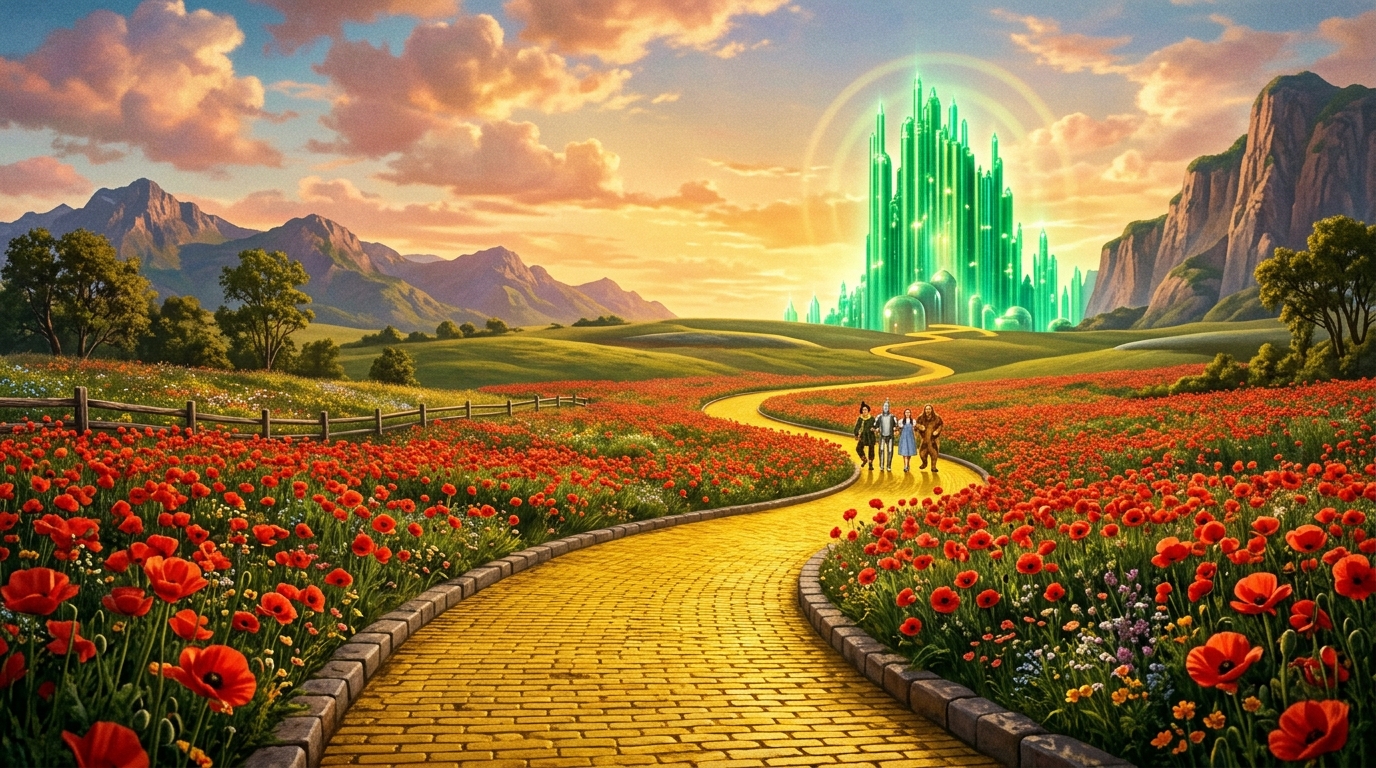
The Wizard Of Oz: Fast Facts, Iconic Lore & Cultural Impact
Premiering in August 1939, Metro-Goldwyn-Mayer's The Wizard of Oz stands as the crowning jewel of Hollywood's Golden Age and the single most-watched motion picture in human history according to the Library of Congress. Adapted from L. Frank Baum's 1900 children's novel The Wonderful Wizard of Oz, the musical fantasy pushed the physical boundaries of 3-strip Technicolor, sound design, and special effects, while enduring one of the most tumultuous, medically hazardous film productions in cinematic history.
At A Glance: Essential 1939 Production Benchmarks
- Release Date: August 25, 1939 (United States theatrical premiere).
- Production Budget: $2,777,000 (MGM's most expensive production up to that point).
- Primary Directors: Victor Fleming (credited), King Vidor, Richard Thorpe, and George Cukor.
- Lead Cast: Judy Garland (Dorothy), Ray Bolger (Scarecrow), Jack Haley (Tin Man), Bert Lahr (Cowardly Lion), Margaret Hamilton (Wicked Witch), Frank Morgan (The Wizard).
- Signature Songs: 'Over the Rainbow', 'Ding-Dong! The Witch Is Dead', 'We're Off to See the Wizard'.
- Academy Awards: Won Best Original Song ('Over the Rainbow') and Best Original Score (Herbert Stothart).
- Historical Recognition: Inducted into the National Film Registry in 1989; ranked #6 on AFI's 100 Greatest American Films.
While generations of viewers remember the dazzling musical as a comforting family fairy tale about friendship and finding home, the journey from script to screen was fraught with chaos: four different directors, near-fatal toxic makeup poisonings, second-degree chemical burns, asbestos-laden soundstages, and studio executives who tried repeatedly to delete its most famous Oscar-winning song.
Behind-the-Scenes Turmoil: Four Directors & Studio Reshoots
Far from a smooth studio production, The Wizard of Oz cycled through four prominent directors before reaching theaters, each dramatically steering the visual aesthetic of the film.
1. Richard Thorpe (The Two-Week Blonde-Wig Disaster)
Filming commenced on October 13, 1938, under director Richard Thorpe. Thorpe envisioned Dorothy Gale as an exaggerated, doll-like storybook figure. He forced 16-year-old Judy Garland into a heavy blonde wig and thick, artificial 'baby-doll' makeup while directing her to deliver an over-the-top, theatrical performance. After reviewing two weeks of initial dailies, producer Mervyn LeRoy realized the footage lacked emotional warmth and fired Thorpe immediately, shelving all completed footage.
2. George Cukor (The Creative Rescuer)
Legendary director George Cukor stepped in as an uncredited interim advisor. Although Cukor did not shoot a single frame of finished film, his creative instinct permanently saved the movie. Cukor ordered the blonde wig discarded, washed away the heavy makeup, and instructed Garland to perform as a natural, vulnerable farm girl from Kansas. He changed Dorothy's pinafore dress to simple blue-and-white gingham, grounding the emotional core of the film in authentic humanity before departing to helm Gone with the Wind.
3. Victor Fleming (The Taskmaster Who Built Oz)
Victor Fleming assumed directorial control on November 3, 1938, shooting the vast majority of the Technicolor fantasy sequences, including Munchkinland, the Yellow Brick Road journey, and the Emerald City. A tough-minded former auto mechanic, Fleming maintained relentless discipline on Stage 27, orchestrating hundreds of actors, intricate wire stunts, and massive optical effects. In February 1939, when George Cukor was abruptly fired from Gone with the Wind, studio boss Louis B. Mayer ordered Fleming to leave Oz and take over Clark Gable's epic, handing the director's chair to his close friend King Vidor.
4. King Vidor (The Kansas Visionary & 'Over the Rainbow')
King Vidor directed the entire sepia-toned Kansas opening sequence, the closing scenes, and the filming of Judy Garland singing 'Over the Rainbow'. Vidor's poetic sensitivity brought deep melancholy to Dorothy's longing for escape. Out of professional loyalty and respect for Fleming, Vidor insisted that Victor Fleming receive sole official directorial screen credit, keeping his own direct contribution secret until Fleming's death in 1949.
On-Set Hazards: Toxic Makeup, Asbestos Snow & Pyro Burns
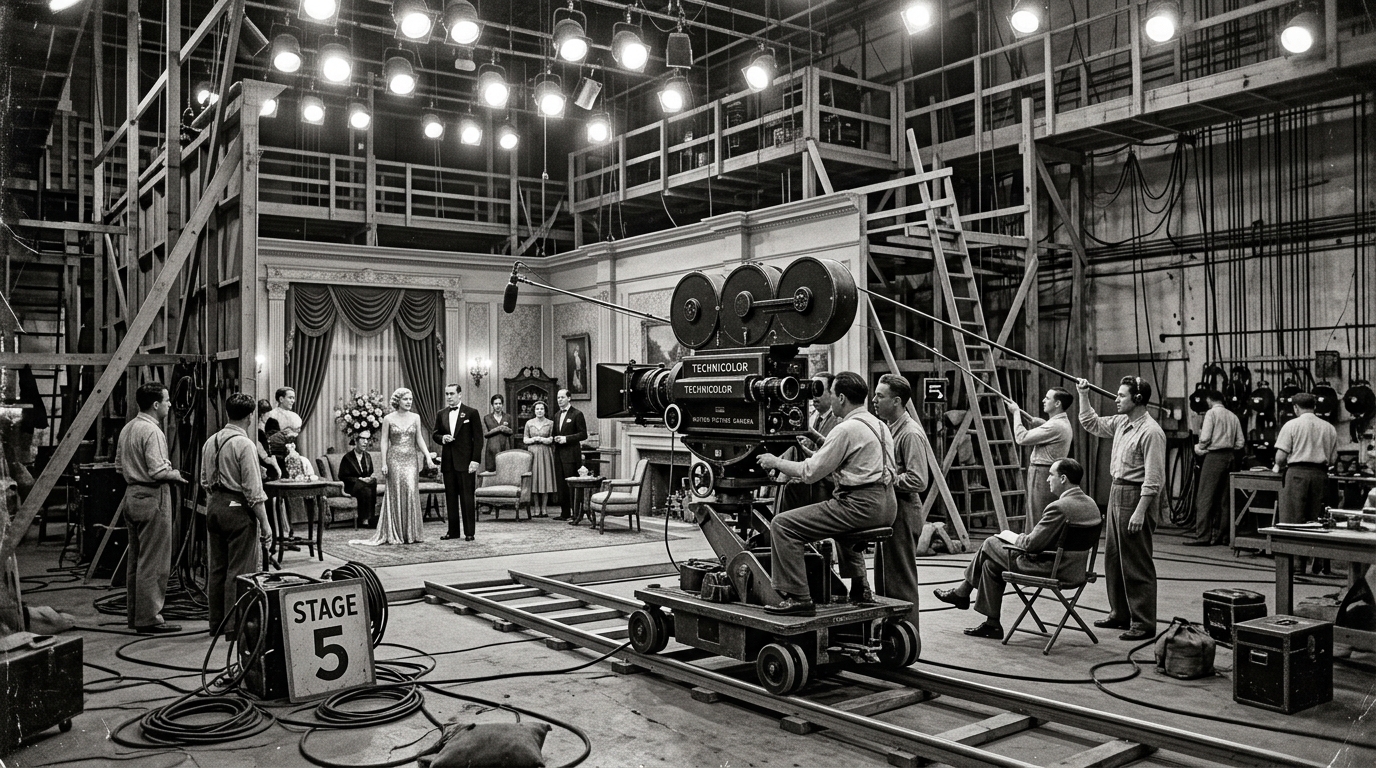
The studio sets of 1938 Culver City were physical minefields for the cast, largely due to primitive special effects materials and the searing requirements of early Technicolor photography.
| Performer | Character Role | Costume / Makeup Architecture | Documented Medical Injury / On-Set Hazard |
|---|---|---|---|
| Buddy Ebsen (Original) | The Tin Woodman | White clown makeup dusted with pure dry aluminum powder. | Near-Fatal Lung Failure: Inhaled toxic aluminum dust; lungs coated in metal. Spent 14 days in an iron lung / oxygen tent; permanently replaced. |
| Jack Haley (Replacement) | The Tin Woodman | Safer aluminum paste suspended in thick mineral oil. | Severe eye infections; immobilized stiff-legged costume prevented sitting between takes. |
| Margaret Hamilton | Wicked Witch of the West | Toxic copper-carbonate green greasepaint. | 2nd & 3rd Degree Pyro Burns: Stage trapdoor delayed during fiery exit; flash explosion ignited green copper paint on face and hand. Out for 6 weeks. |
| Betty Danko (Stunt) | Wicked Witch Stunt Double | Green makeup on smoking mechanical pipe broomstick. | Exploding Pipe Injury: Smoking broomstick pipe ruptured on wire rig, permanently scarring her legs; hospitalized for 11 days. |
| Ray Bolger | The Scarecrow | Fitted burlap-patterned rubber facial prosthetics. | Chemical adhesive and hot rubber baked into facial skin, leaving visible lines around his mouth and chin for over a year. |
| Bert Lahr | The Cowardly Lion | Constructed from 90 pounds of genuine lion pelts and fur. | Extreme heat exhaustion and dehydration under 100°F studio carbon arc lights; required two assistants to dry costume in ovens overnight. |
The Deadly Asbestos Snowstorm
In one of the film's most visually enchanting moments, Glinda, channeling the protective guidance mirrored in the Queen of Wands tarot archetype, breaks the Wicked Witch's sleep spell over Dorothy and the Cowardly Lion by covering the bright scarlet poppy field in a gentle snowfall. In 1938, Hollywood had not yet developed safe synthetic snow. Instead, studio special effects crews used commercial chrysotile asbestos fibers (sold under brand names like 'White Magic'). Asbestos was prized by studios because it floated realistically through the air and posed zero fire risk around hot carbon-arc electrical rigging. Judy Garland and her co-stars spent days on the soundstage singing and inhaling pure airborne asbestos fibers.
Debunking Myths: The Hanging Silhouette & 'Dark Side of the Rainbow'
Few motion pictures have generated more persistent urban legends than The Wizard of Oz. Two famous myths continue to circulate on social media, both thoroughly disproven by archival evidence.
1. The 'Hanging Munchkin' Urban Legend (Debunked)
For decades, viewers of grainy VHS videotapes claimed that in the background of the forest scene, just as Dorothy, the Scarecrow, and the Tin Man sing 'We're Off to See the Wizard', the silhouette of a distraught Munchkin actor can be seen hanging from a tree. In reality, MGM leased several dozen live exotic birds and animals from the Los Angeles Zoo, including cranes, emus, geese, and peacocks, to wander Stage 27 to give the forest soundstage an authentic outdoor ambience. When viewed on high-definition 4K restorations, the figure is clearly revealed to be a large, long-necked African crane stretching its wings and preening its feathers in the background foliage.
2. 'Dark Side of the Rainbow' (Pink Floyd Synchronization)
In the mid-1990s, an internet phenomenon claimed that British rock band Pink Floyd deliberately engineered their iconic 1973 album The Dark Side of the Moon to synchronize perfectly with The Wizard of Oz when started on the third roar of the MGM lion. Synchronicities include the cash register sound effect on 'Money' playing as Dorothy steps onto the Yellow Brick Road, and heartbeats sounding as Dorothy listens to the Tin Man's chest. Pink Floyd guitarist David Gilmour, bassist Roger Waters, and recording engineer Alan Parsons have repeatedly laughed off the connection as pure coincidence, noting that in 1972, video cassette players did not yet exist in London recording studios to allow such synchronization.
Costume & Prop Lore: Ruby Slippers & Baum's Miraculous Coat
The material artifacts of The Wizard of Oz represent some of the most valuable cultural treasures in American history.
Why the Slippers Became Ruby Red
In L. Frank Baum's 1900 novel, Dorothy wore silver slippers. However, in late 1938, Technicolor was eager to demonstrate the commercial superiority of its three-strip dye-transfer process over black-and-white film. Screenwriter Noel Langley recognized that silver would look dull against the golden-yellow brick road. Producer Mervyn LeRoy made the executive decision to change the footwear to bright ruby red. Crafted by legendary MGM costume designer Adrian, the shoes featured burgundy silk georgette covered in nearly 2,300 sparkling red sequins. Today, the surviving pairs of slippers are priceless, one pair is preserved at the Smithsonian National Museum of American History, while another pair, stolen from the Judy Garland Museum in Grand Rapids, Minnesota, in 2005, was recovered by the FBI in an undercover sting operation in 2018 and valued at over $3.5 million.
The Eerie Miracle of Frank Morgan's Coat
To dress Frank Morgan for his role as Professor Marvel (the traveling fortune teller in Kansas), the wardrobe team scoured second-hand clothing stores in downtown Los Angeles looking for an ornate, once-aristocratic frock coat that had fallen into disrepair. They purchased a rack of old Prince Albert coats and presented them to Morgan and director Victor Fleming. Morgan selected a heavy wool coat with a velvet collar. One afternoon on set, Morgan turned out the inside breast pocket and discovered a small cloth tailor's label inscribed with the name: L. Frank Baum, the deceased author of the original book. Inquiries with Baum's Chicago tailor confirmed the coat had indeed been tailor-made for Baum in the late 1890s, and Baum's widow, Maud Gage Baum, visited the MGM lot and verified that it belonged to her late husband.
The Music of Oz: The Battle Over 'Over the Rainbow'
Written by legendary composer Harold Arlen with lyrics by E.Y. 'Yip' Harburg, 'Over the Rainbow' is celebrated as the #1 Movie Song of All Time by the American Film Institute. Yet the ballad almost never reached theaters.
Following test previews in San Luis Obispo, MGM studio executives, including Louis B. Mayer and Eddie Mannix, demanded the song be cut from the final film. Executives argued that the song slowed down the narrative pacing of the Kansas introduction and insisted it was 'beneath an MGM musical star to sing in a dirty barnyard.' Associate producer Arthur Freed intervened directly, threatening to resign from the studio if the song was removed. Mayer relented, and 'Over the Rainbow' went on to win the Academy Award for Best Original Song, providing Judy Garland with her signature lifetime anthem.
The Meaning of Oz: The 1890s Populist Allegory & Psychology
Beyond its charm as a children's fairy tale, scholars and historians have analyzed The Wizard of Oz through deep sociological, political, and psychological frameworks.
The Henry Littlefield Populist Parable (1964)
In 1964, historian Henry Littlefield published a groundbreaking article in American Quarterly proposing that L. Frank Baum's 1900 book was a thinly disguised political parable addressing the Gilded Age monetary crisis, the 1893 economic depression, and the Populist movement:
- Dorothy Gale: Represents the wholesome, common American citizen, resilient, kind, and seeking common-sense solutions.
- The Scarecrow: Symbolizes the Midwestern agrarian farmers, often dismissed as 'brainless' rubes by coastal elites, but possessing innate wisdom, resourcefulness, and practical intelligence.
- The Tin Woodman: Represents the American industrial factory laborer, mechanized and dehumanized by factory machinery during the Industrial Revolution until he lost his heart.
- The Cowardly Lion: An allegory for Democratic-Populist presidential candidate William Jennings Bryan, famous for his roaring oratorical style ('Cross of Gold' speech) but criticized by opponents for lacking political bite.
- The Yellow Brick Road: Symbolizes the strict Gold Standard monetary policy favored by Wall Street banks.
- The Silver Slippers (Ruby in Film): Represent the Free Silver movement (bimetallism), which Populists believed would inject currency into the economy and relieve working-class debt.
- The Emerald City: Symbolizes Washington, D.C., where citizens are forced to view reality through green-tinted glasses (paper greenback currency).
- The Wizard: Represents President William McKinley (or Gilded Age politicians), maintaining authority through smoke, mirrors, and theatrical illusions while having no real power to solve societal troubles.
Jungian Archetypes and the Hero's Journey
Psychologically, the narrative follows Carl Jung's process of individuation. The Scarecrow, Tin Man, and Cowardly Lion represent Dorothy's disowned inner qualities, intellect, emotional empathy, and courage. By helping them, Dorothy integrates these virtues within herself. The climatic revelation, that Glinda reveals Dorothy always possessed the power to return home, underscores the psychological truth that external authorities (wizards and institutions) cannot grant self-worth; the capacity for fulfillment and belonging resides within oneself.
Box Office Economics & The Television Renaissance
Contrary to modern assumption, The Wizard of Oz was not a blockbuster profit-generator upon initial release. Its lavish production costs ($2.8 million) and extensive promotional campaign left MGM facing a net loss of over $1 million after its 1939 run, particularly as European theatrical revenue collapsed with the outbreak of World War II in September 1939.
The film achieved financial salvation and universal immortality through the advent of national television broadcasting. On November 3, 1956, CBS broadcast The Wizard of Oz for the first time during the Ford Star Jubilee, drawing a staggering 45 million viewers. Beginning in 1959, television networks established it as an annual family prime-time broadcast tradition, introducing new generations of children to the magical journey down the Yellow Brick Road every holiday season, establishing an American broadcast ritual alongside holiday traditions on Memorial Day weekend.
Cast Compensation vs. Animal Pay: The Studio Economics
The studio accounting logs of 1938 provide fascinating insight into classic Hollywood's labor economics:
| Performer | Weekly Salary (1938 Dollars) | 2026 Inflation-Adjusted Equivalent | Contract Notes & Historical Context |
|---|---|---|---|
| Ray Bolger (Scarecrow) | $3,000 / week | ~$67,000 / week | Highest-paid actor on set; established Broadway star who demanded top billing. |
| Jack Haley (Tin Man) | $3,000 / week | ~$67,000 / week | Brought in as an established radio and stage headliner to replace Buddy Ebsen. |
| Bert Lahr (Cowardly Lion) | $2,500 / week | ~$56,000 / week | Vaudeville star renowned for his physical comedy and burlesque vocal delivery. |
| Frank Morgan (The Wizard) | $2,000 / week | ~$45,000 / week | Played five distinct characters across Kansas and the Emerald City. |
| Margaret Hamilton (Wicked Witch) | $1,000 / week | ~$22,500 / week | Former kindergarten teacher turned character actress; contracted for 6 weeks, worked 14 weeks due to burns. |
| Judy Garland (Dorothy) | $500 / week | ~$11,200 / week | Under restrictive MGM contract as a minor; earned one-sixth of her male co-stars despite carrying the entire film. |
| Terry the Dog (Toto) | $125 / week | ~$2,800 / week | Female Cairn terrier trained by Carl Spitz; earned more than most human background actors. |
| Munchkin Actors (124 performers) | $50 - $100 / week | ~$1,100 - $2,250 / week | Recruited via Leo Singer's vaudeville troupe; underpaid relative to grueling soundstage conditions. |
Frequently Asked Questions
What happened to the original Tin Man actor Buddy Ebsen in The Wizard of Oz?
Buddy Ebsen originally rehearsed and filmed as the Tin Woodman for nine days before developing sudden, severe lung failure and respiratory cramping. His lungs were poisoned by breathing in fine pure aluminum dust makeup applied to his skin. He spent two weeks in an oxygen tent in critical condition. MGM quickly replaced him with Jack Haley and switched the makeup formula to a safer aluminum powder paste blended with mineral oil.
Why were the slippers changed from silver to ruby red?
In L. Frank Baum's original 1900 novel 'The Wonderful Wizard of Oz', Dorothy wore silver shoes. In 1938, screenwriter Noel Langley and MGM producer Mervyn LeRoy decided to change them to ruby red because Metro-Goldwyn-Mayer was showcasing groundbreaking Technicolor Process 4. Ruby red sequins created an extraordinary, vivid contrast against the bright yellow brick road on color film.
Is the rumor true that a Munchkin actor hanged himself on set during filming?
No, this is a thoroughly debunked Hollywood urban legend. The mysterious dark shadow visible in the background forest as Dorothy, the Scarecrow, and the Tin Woodman dance down the yellow brick road is actually a live, exotic African crane (or emu). MGM leased several dozen live birds and exotic animals from the Los Angeles Zoo to make the Oz soundstage feel wild and realistic, and the crane was spreading its wings on Stage 27.
What was the fake snow in the poppy field scene actually made of?
The falling snow in the famous poppy field scene was made from 100% pure chrysotile asbestos fibers. In 1938, industrial white asbestos was widely marketed in Hollywood and department stores as artificial snow because of its fluffy white appearance and fireproof properties. Judy Garland, Ray Bolger, Jack Haley, and Bert Lahr breathed in asbestos dust while singing and lying in the artificial poppies.
What is the deeper political meaning and populist allegory of The Wizard of Oz?
In 1964, high school educator Henry Littlefield published a famous thesis demonstrating that L. Frank Baum's story functions as a late-19th-century Populist allegory: Dorothy represents the everyday American citizen; the Scarecrow represents struggling Midwestern farmers; the Tin Woodman represents industrial laborers stripped of humanity by factory machines; the Cowardly Lion represents politician William Jennings Bryan; the Yellow Brick Road represents the gold standard; the silver slippers represent the Free Silver movement; and the Wizard represents President William McKinley hiding behind grand political illusions.
Was The Wizard of Oz a box office success when it was first released in 1939?
Initially, no. Despite rave critical reviews and six Academy Award nominations, The Wizard of Oz barely recouped its massive $2.8 million production budget (MGM's most expensive production at the time) during its 1939 theatrical run. It did not turn a substantial profit until its 1949 theatrical re-release and its historic television broadcast debut on CBS on November 3, 1956, where 45 million viewers watched, launching an annual holiday television tradition.
How old was Judy Garland when she played Dorothy Gale?
Judy Garland was 16 years old during filming (born June 10, 1922; filming took place between October 1938 and March 1939), playing a young girl characterized as 11 or 12 years old. To make her appear younger, MGM wardrobe department tightly bound her bust with a painful corset and dressed her in a pinafore dress designed to minimize her curves.
